Want to be in the loop?
subscribe to
our notification
Business News
NEW HOUSING LAW TRIGGERS MARKET STIR
Developers are obviously ready now as the products will initially be the same as offered to domestic buyers. Depending on the level of interest from foreigners, there may be changes to cater for offshore investors. An example of this may be to offer terms that suit investors more than occupiers, such as guaranteed returns.
Foreign developers, however, already have their sales channels in place and can move to the market quickly. Local developers will need to have a good sales strategy and either align with good marketers or go direct themselves to these foreign markets. This is all contingent on the amendments allowing foreign investment as contemplated.
In conjunction with our regional offices, Savills is already planning to host several events. One of the key issues now is having sufficient quality stock to provide investors with a good choice.
Regarding the type of products which would be most attractive to foreigners, I think it will be the broader-based investment product.
Many of our neighbouring countries have record low deposit rates, so if Vietnam offers a product that has reasonable yields then this will be very attractive.
There will be variations around this theme as some areas will also provide capital growth, thereby enhancing total returns in Vietnam. Other regional markets have had restrictions in policy as well as soft economic conditions weakening their residential markets. This together with low performance by cash and other asset classes should see a flight to Vietnamese property with good total returns.
The key markets will be those that have mature trading as well as access to the larger populations with investment potential. We see these markets as primarily Singapore and Hong Kong. Recently there have been very successful project sales in Cambodia and Myanmar that have marketed investment products. Generally these are smaller more affordable apartments with some sort of guaranteed return. Historically, developers have aimed for the end-user market, catering to the ultimate occupants. However, for investors they will care more about the potential to rent and receive a yield. This may change the focus to better locations, higher density districts and those with emerging capital growth potential.
Recently, we have seen some agencies from abroad coming to Vietnam to introduce their products. I think this could be a good option. Provided Vietnam’s amended laws support purchasers’ rights, then this will certainly work. It has worked extremely well in other locations. This is why the flight of investment capital has continued from Asia into Australia and the UK. Fundamentally it’s the transparency and enforceability of title and rights that purchasers are seeking.
For example, in 2014 a single residential agent in our Savills Taiwan office brought over 80 residential investment sales into Australia.
However, this is a competitive market with purchasers having a number of good choices available within the region, so the product will need to be priced and delivered against this backdrop.
On the attractiveness of the revised law for foreigners to buy houses in Vietnam, let us see how the decrees and circulars guide the amendments. It would be premature to comment prior to these being circulated. We are very happy that the government continues to provide policies that assist property development.
If the guiding decrees effectively limit the foreigner purchasers to those that are working in Vietnam then the impact would be very limited.
However if the amendment permitted ‘golden visas’ or investment then there would be strong demand. The next step to be contemplated is the ‘exit’. If there is potential for foreign investment then competing countries would also offer depreciation allowances to be offset against income for tax. There would also need to be a solid capital gains taxation regime and a clear pathway for repatriation of dividends.
In the coming time, if we look to mature markets with relaxed foreign ownership then usually no greater than 5 per cent annually of all transactions are to foreigners.
I expect the government to offer a support policy to assist the residential sector; however there will be strong parallel guidance through visas, tax and dividend remittances etc.
Amongst our regional peers, the Malaysia My Second Home programme is hugely successful and has been running for over 15 years, however there has not been a massive influx of any single foreign nation, nor have there been adverse effects. To the contrary, the scheme has worked very well, actively attracting foreign capital to Malaysia.
Source: VIR
Related News

MEMBER CORNER / PROMOTIONS
KNIC EXCLUSIVE GATHERING & NETWORKING 2026: A NEW MEETING POINT FOR INDUSTRIAL INVESTMENT IN HANOI
On October 2, 2026, KN Industrial City (KNIC) will host KNIC Exclusive Gathering & Networking 2026 at the National Innovation Center (NIC) in Hanoi. Building on a series of business networking and investment promotion activities in Ho Chi Minh City and Dong Nai, the event marks a new opportunity for KNIC to connect with businesses, investors, and partners in Northern Vietnam.
MEMBER CORNER / PROMOTIONS
KNIC ENGAGES WITH GOVERNMENT AND HIGH-TECH BUSINESS COMMUNITIES IN CHINA
From Beijing to Shandong, KN Holdings and KN Industrial City are continuing to expand their engagement with government authorities, trade promotion organizations, and high-tech business communities in China. In Beijing, the delegation met with the Center for International Economic and Technological Cooperation under the Ministry of Industry and Information Technology (MIIT), exchanging perspectives on industrial and technology cooperation between the two markets.

VIETNAM ECONOMY INVESTMENT
VIETNAM’S TRADE TOPS $825 BILLION BY MID-SEPTEMBER
Figures released on September 21 showed goods trade reached nearly $55 billion in the first 15 days of September alone, bringing cumulative turnover since the beginning of the year to more than $825 billion. The strong growth reflects robust trade flows, with demand for consumer goods and production inputs remaining high.

TECHNOLOGY
VIỆT NAM'S BUSINESSES MOVE TOWARDS AI AGENTS
Việt Nam’s AI landscape is entering a new phase as businesses move beyond generative AI (GenAI) tools designed to assist human users towards autonomous AI, agentic AI and AI agents that can take action with limited supervision, experts have said. The shift comes as Việt Nam seeks to accelerate science and technology, innovation and digital transformation under Politburo Resolution 57-NQ/TW, issued on December 22, 2024.
GARMENT / TEXTILE
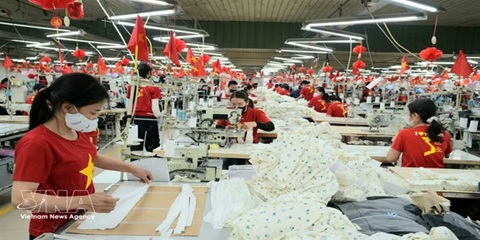
VIỆT NAM TARGETS $48 BILLION IN TEXTILE-GARMENT EXPORTS
Việt Nam’s textile and garment industry is facing both opportunities and challenges amid complex and unpredictable developments in the global market, prompting businesses to improve growth quality, optimise production costs and enhance adaptability in pursuit of an export turnover of about $48 billion this year. The target is considered an important milestone that requires concerted efforts from management agencies and the business community.
INFRASTRUCTURE / CONSTRUCTION / LOGISTIC / PORT
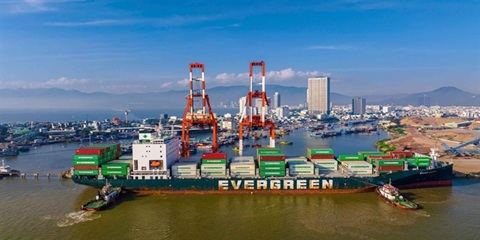
CUTTING LOGISTICS COSTS KEY TO BOOSTING EXPORTS
Reducing costs has become an increasingly urgent priority for import-export activities, particularly logistics costs, a conference in Hà Nội was told on Tuesday. According to Deputy General Director of the Ministry of Industry and Trade's Agency for Foreign Trade, Trần Thanh Hải, import-export activities has remained a bright spot for the economy in recent years, playing an important role and helping drive macroeconomic growth.
Events Sponsors






















